Korean cut: what it is and how it differs from the European one
The Korean cut made simple: how it differs from the European one, who it suits and how to choose your size. Step-by-step tips plus ready-made capsules from IWANT.
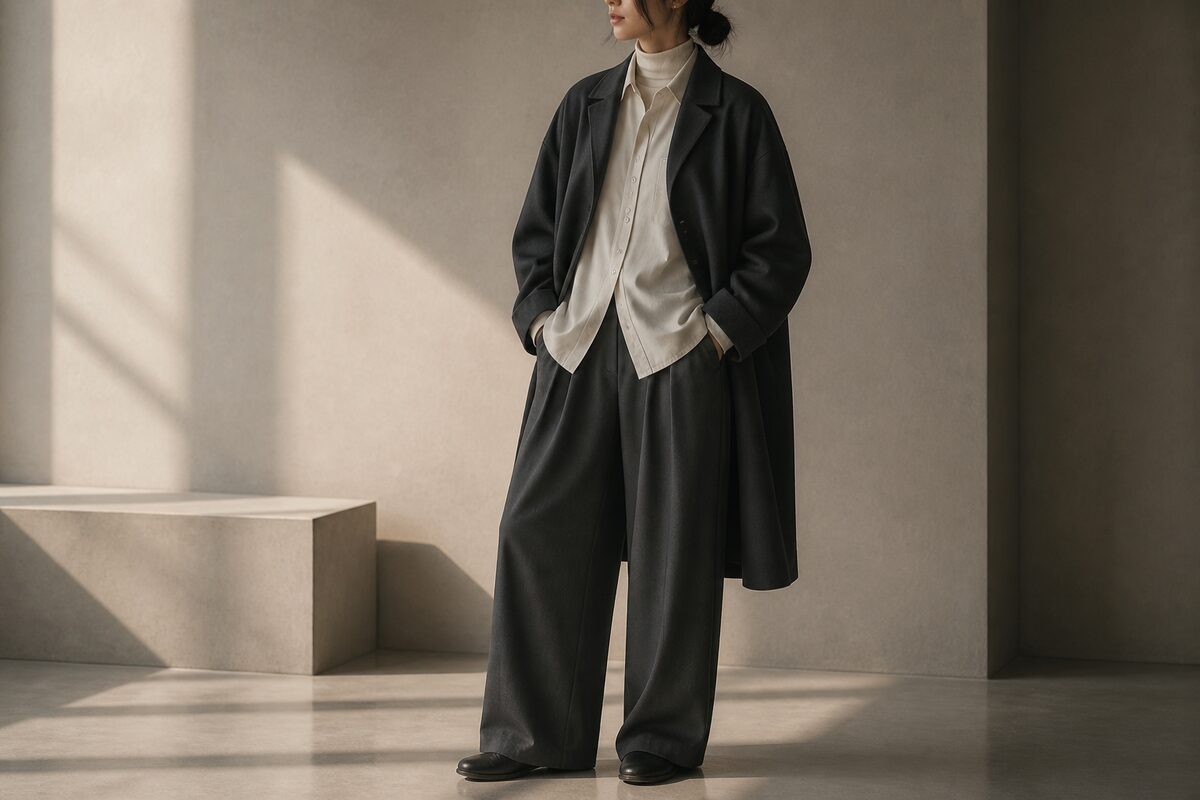
Korean cut: what it is and how it differs from the European one
The Korean cut is about freedom of movement, clean lines and the right kind of oversize. Below is a simple comparison with the European cut, how to choose your size and what to look for in the fit.
What the Korean cut is
·
How it differs from the European one
·
How to choose your size
·
Fit: what counts as ideal
·
What to wear it with (capsules)
·
FAQ
What the Korean cut is
The Korean cut (K-style fit) is a system of patterns in which freedom and body proportions work for the silhouette: the shoulder is slightly dropped (drop-shoulder 1–3 cm), the armhole is comfortable, the sleeve may be a touch longer, and the body is straight or boxy. The piece looks relaxed yet put together — never baggy.
Shoulder: a gentle drop-shoulder visually widens the shoulder line and adds modern geometry.
Armhole/sleeve: a roomy armhole means the sleeve doesn't pull when you move.
Silhouette: straight/boxy, with clean verticals that visually slim the figure.
Length: the top is usually shorter — keeping the balance with wide bottoms.
Materials: dense knits and tech fabrics that hold their shape well.
A cut like this easily builds capsules around the basics: jumpers, jeans, outerwear, accessories.
How the Korean cut differs from the European one
In short: K-style is about freedom and lines, EU-fit is about the figure and the waist. Details below.
Shoulder line. K-style — a dropped shoulder and a relaxed fit; EU-fit — a seam level with the shoulder bone for a sharp vertical.
Volume across chest/back. K-style builds in technical room for layering; EU-fit sits closer to the body and emphasises the shape.
Length of the top. In K-style the top is often shorter (balancing wide bottoms); in EU-fit it's the classic hip length.
Silhouette. K-style — straight/boxy, minimal tailoring; EU-fit — fitted/semi-fitted.
Materials. K-style favours dense knits and tech fabrics; EU-fit more often works with soft, drapeable compositions.
Want strict geometry — go for EU-fit. Looking for a modern silhouette and comfort — the Korean cut is the one for you.
How to choose your size in Korean models
Most K-style models have a constructed oversize. If you're hesitating between two, take the larger one — the fit will look "just like the lookbook" and the freedom of movement will be preserved.
Quick rules
Tops (jumpers, hoodies, sweatshirts): your usual size gives the signature boxy silhouette; "minus one" brings it closer to a European fit. Useful sections: jumpers, sweatshirts and hoodies, cardigans and jumpers.
Outerwear: take your size — it fits over a dense jumper layer. See "outerwear".
Bottoms (jeans/trousers/skirts): go by hip/waist measurements. For straight and wide-leg — your size; for a "to the waist" fit — check against your measurements. Sections: jeans, trousers, skirts.
Blazers/jackets: choose by shoulder width and chest volume — blazers.
Returns/exchanges — 14 days. We'll help you choose your size in the chat — browse the collections in the women's section.
Fit: what counts as ideal
Shoulder: the seam sits 1–3 cm below the natural line — your arm raises freely and the folds don't "break" across the chest.
Sleeve: covers the wrist; holds its shape when rolled up.
Body: there's "air" between the fabric and the body — your palm slides through freely; the verticals stay clean.
Length: the top ends above the widest part of the hips — balancing wide trousers/jeans.
What to wear it with: quick K-style capsules
Capsule 1 (autumn in the city): a clean coat/jacket + a dense jumper + straight jeans.
Capsule 2 (black total look): a boxy jumper + wide-leg trousers + minimalist accessories.
Capsule 3 (office casual): a blazer + a shirt + straight trousers.
View K-style looks · SALE section · IWANT women's clothing
This material was prepared by IWANT. If you still have questions, message us in the chat on the site: we'll help you choose your size and put together a look.
{ "@context": "https://schema.org", "@type": "Article", "headline": "Korean cut: what it is and how it differs from the European one", "author": { "@type": "Organization", "name": "IWANT" }, "publisher": { "@type": "Organization", "name": "IWANT" }, "datePublished": "2025-10-20", "dateModified": "2025-10-20", "mainEntityOfPage": { "@type": "WebPage", "@id": "https://iwantconcept.store/blog/kstyle-vs-eu" }, "description": "Short and to the point: how the Korean cut differs from the European one, how to choose your size and which fit counts as ideal. Plus ready-made capsules with links to IWANT sections." } { "@context":"https://schema.org", "@type":"FAQPage", "mainEntity":[ {"@type":"Question","name":"How does the Korean cut differ from the European one?", "acceptedAnswer":{"@type":"Answer","text":"K-style — a gentle drop-shoulder, a straight boxy silhouette and built-in technical room. EU-fit — a level shoulder, a semi-fitted cut and an emphasis on the figure."}}, {"@type":"Question","name":"How do I choose my size in Korean models?", "acceptedAnswer":{"@type":"Answer","text":"If you're hesitating between two, take the larger one. For tops, your usual size gives the signature boxy silhouette; \"minus one\" brings it closer to a European fit. For bottoms, go by waist/hip measurements."}}, {"@type":"Question","name":"Can I return or exchange it if the size doesn't fit?", "acceptedAnswer":{"@type":"Answer","text":"Yes, at IWANT returns/exchanges are within 14 days. Details are on the checkout page."}} ] } { "@context":"https://schema.org", "@type":"BreadcrumbList", "itemListElement":[ {"@type":"ListItem","position":1,"name":"Home","item":"https://iwantconcept.store/"}, {"@type":"ListItem","position":2,"name":"Blog","item":"https://iwantconcept.store/blog"}, {"@type":"ListItem","position":3,"name":"Korean cut: what it is and how it differs from the European one","item":"https://iwantconcept.store/blog/kstyle-vs-eu"} ] }