Unisex Style Clothing
The unisex style emerged in the 1960s, at the moment when the traditional roles of women and men in modern society began to be reconsidered.
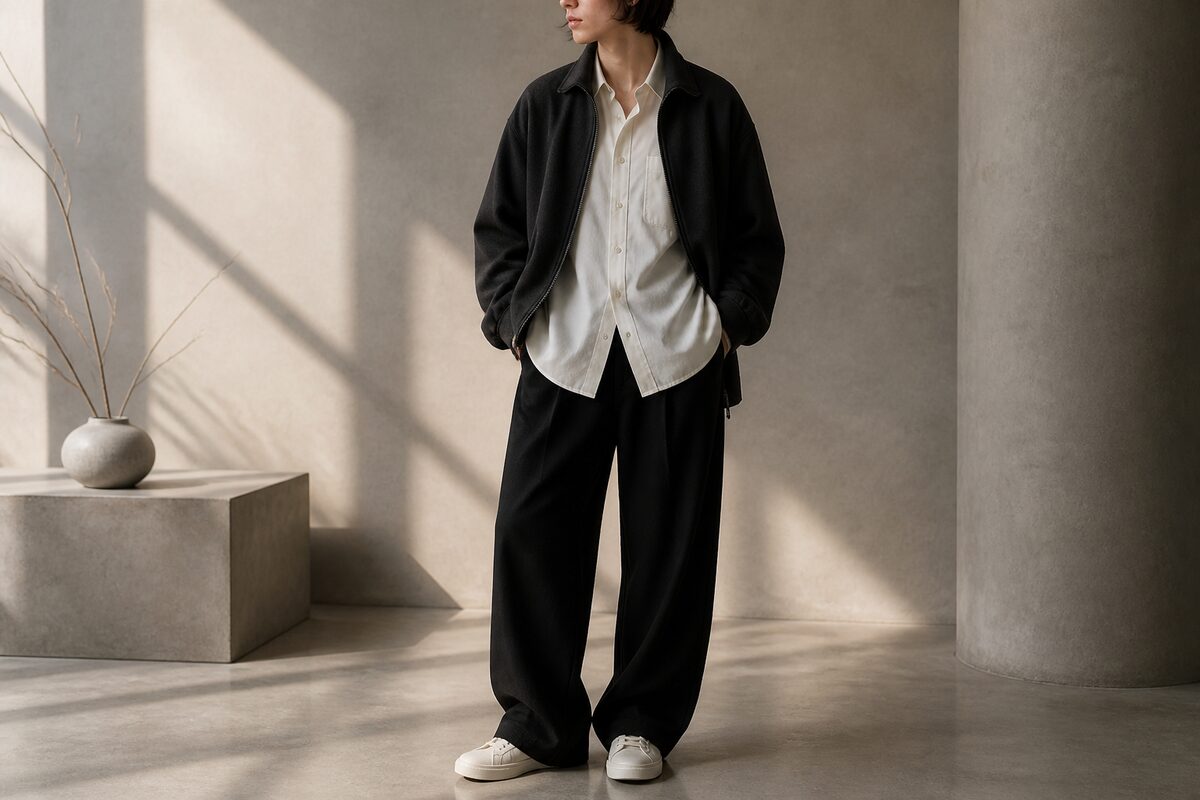
The unisex style emerged in the 1960s, at the moment when the traditional roles of women and men in modern society began to be reconsidered. Many contemporary designers argue that wearing such clothing is one way to make the case for overcoming gender inequality.
This style spread to clothing, make-up, footwear, hairstyles, perfume and accessories. Its main hallmark became the absence of any detail in a person's look that might indicate their sex. It is also characterised by a certain simplicity and minimalism. Decorative elements and ornamentation are barely used in it.
Because of the different physiological features of female and male figures, the cut of close-fitting clothing usually differs. Outerwear and loose-fitting garments, however, as well as knitwear (roll-necks and T-shirts), can be worn by both men and women. They suit any figure, which is why the unisex style is often favoured by people who find it difficult to choose pieces for their wardrobe.
There are the following variations of the unisex style:
street;
classic;
military;
globalist;
protest.
Classic "genderless" clothing includes T-shirts, jeans, pullovers, jackets, jumpers, roll-necks, shirts and some other pieces.
Shirts
This is one of the varieties of upper bodywear. They came into widespread use as far back as the Renaissance. In the 1960s, shirts began to be worn on their own, without any other garment over them.
Today the men's shirt has become one of the staple pieces in a woman's wardrobe. It is a comfortable, practical item that can be combined with a variety of outfits.
To create a unisex look in the spirit of restrained classics, a woman can wear a white men's-cut shirt under tailored trousers and complete it with a waistcoat or blazer, which heighten the move away from femininity even further. A tie in a matching style would also be fitting in such a look.
A checked shirt is another popular accessory of the unisex style; women can tuck it into their jeans, or leave it partly unbuttoned and tie it at the front in a knot. Such a look will help you emphasise your love of independence and freedom. A loose denim shirt can be used for the same purpose.
Shirts also pair well with skirts of all sorts of cuts. To make such a look more stylish, you can roll up the sleeves a little.
Jumpers and sweatshirts
To create a look in this style, sweatshirts and jumpers can be combined with skirts of different lengths, leggings and jeans. In recent years sweatshirts have been especially on-trend – straight-silhouette knit pieces that are a hybrid of a jumper and a hoodie.
Trousers and suits
Tailored suits and trousers in the unisex style are often used in their everyday looks by today's businesswomen. By wearing such clothing, they subconsciously seek to show men that they are capable of being just as successful in business as they are.
Devotees of the style described here go for straight-cut blazers whose silhouette has not the slightest hint of being fitted. They can be worn with jeans, shorts or trousers. Particularly popular today are longer oversized models with deliberately enlarged shoulders.
Outerwear
The capsule wardrobe of many modern women, regardless of the particulars of their figures, includes greatcoat-style coats and trench coats. Designers borrowed the silhouettes of these pieces from classic-cut men's coats.
Footwear
Modern women make wide use of typically men's-style footwear in their wardrobe. Men's boots on a heavy, thick sole are what allow a woman's look to gain an edge of toughness and ruggedness.
One of the most popular footwear styles in the unisex style today are plimsolls – very comfortable, functional pieces that are pleasant to wear in dry weather. On cold or rainy days, plimsolls can be swapped for fashionable trainers.
With a tailored classic suit, ladies can pair stylish patent shoes in a men's style.